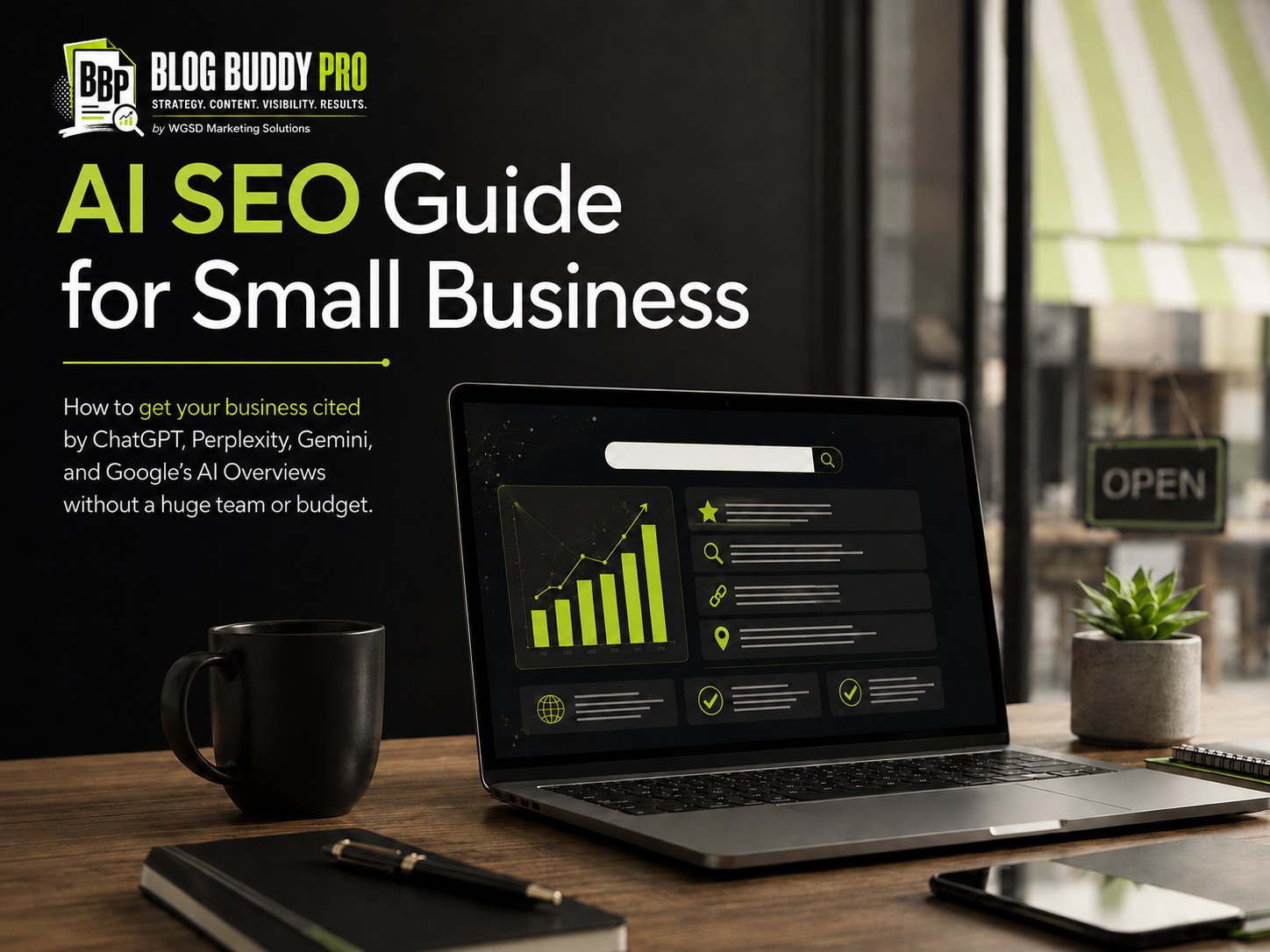
AI SEO is the practice of optimizing your website so AI-powered search engines - ChatGPT, Perplexity, Gemini, Claude, and Google's AI Overviews - can find, understand, and cite your content when they generate answers.
What is AI SEO?
AI SEO is the discipline of shaping web content so it performs well inside AI-generated answers, not just traditional blue-link search results. It overlaps heavily with SEO fundamentals - quality, structure, authority - but adds new priorities for how large language models retrieve and synthesize information.
The specific subset of AI SEO focused on generative answer engines is called Generative Engine Optimization (GEO).
Why AI SEO matters for small business
- AI answers are replacing traditional search for many informational queries
- Small, focused experts often out-rank large generic brands inside AI answers
- AI citations drive brand awareness even when the user never clicks a link
- Getting cited by one AI engine often signals authority to the others
The 5 pillars of AI SEO
1. Answer-first structure
Give the direct answer in the first 50–100 words of every post. AI engines extract early content preferentially - bury the answer and you lose the citation.
2. Question-shaped headings
Write H2s the way real users ask questions. "How does X work?" outperforms "The X process" because it matches the conversational queries people type into AI tools.
3. Structured data & lists
Comparison tables, numbered steps, bullet lists, and FAQ sections are the formats AI engines quote most often. Add Article and FAQPage schema so machines can parse the structure explicitly.
4. Expertise & original insight
AI engines devalue paraphrased content. Original data, real case studies, named experts, and clear author bylines all raise the odds your content becomes the cited source.
5. Freshness & maintenance
Update key posts every 3–6 months. Publish and last-updated dates are strong trust signals - outdated content gets deprioritized by both Google and AI engines.
AI SEO checklist for small business
- Add a clear, direct answer within the first 100 words of every post
- Use question-format H2 and H3 headings
- Include an FAQ section with FAQPage schema on informational posts
- Add author, publish date, and last-updated date visibly on-page
- Publish original data, screenshots, or client examples where possible
- Cover topic clusters, not one-off keywords - depth signals authority
- Cite sources with real links to raise trust signals
- Refresh top-performing posts every 3–6 months
Want AI SEO done for you?
Our monthly blog writing service is built around GEO and AI search from the ground up - every post is optimized for both Google and generative engines.
FAQ
Is AI SEO different from traditional SEO?
Overlapping but distinct. Traditional SEO targets Google's blue links; AI SEO targets citations inside AI-generated answers from ChatGPT, Perplexity, Gemini, and Google's AI Overviews. Foundational quality signals matter for both, but structure and clarity matter more for AI.
Can small businesses actually rank in ChatGPT and Perplexity?
Yes - often more easily than in traditional Google search. AI engines favor clear, expert, directly-answered content over domain size. A specialist small business with structured, factual content can be cited ahead of a national brand.
How long does AI SEO take to work?
AI citations often appear faster than Google rankings - sometimes within weeks of publishing well-structured content. Consistent publishing over 3–6 months compounds visibility across multiple AI engines.
Do I need special AI SEO tools?
Not really. The fundamentals are structure, clarity, authority, and freshness. Tools help with tracking (Profound, Otterly, Peec AI), but the work itself is content strategy plus disciplined on-page execution.